
Lynwood Previous Residents Sources
The best source changes with the era. County title records reach far earlier than the city’s incorporation, while the verified local directory shelf is strongest in selected years. The table keeps a former resident search tied to real local coverage rather than a generic national timeline.
| Source | Years it covers | Where held | What it adds |
|---|---|---|---|
| RR/CC real-property records | 1850/1851 to present | Norwalk Recorder Division | Title parties, instruments, dates, liens, legal descriptions |
| Assessor parcel and roll | Current web snapshot; historic exact run not stated | Assessor Portal and offices | AIN, situs, property facts, current assessee through offline route |
| Bell telephone directory | 1931 | LA County Library Californiana | Telephone-era listed names and addresses |
| Greater Los Angeles business directory | 1952 | LA County Library Californiana | Business or person entry in a physical volume |
| Haines criss-cross | 1981 partial, 1983 partial, 1984 to 1992 | LA County Library Californiana | Address-to-listed-name snapshots |
| Federal census | Public through 1950 | NARA and library databases | Household composition at an enumeration date |
| City permits and planning | City incorporation in 1921; archive start not published | Lynwood City offices | Address-dated physical changes and releasable file clues |
| Newspaper, obituary, probate | Varies by title and case | Libraries, LASC, archives | Family links, death, heirs, service or civic context |
These sources overlap without becoming interchangeable. A title chain can miss a long-term occupant. A directory can miss an unlisted subscriber. A census can lag a move. Previous residents emerge from overlap, not from a single row.
Start Lynwood House History Backward
Begin at the current parcel. Enter the complete address in the Assessor Portal and save the ten-digit AIN, situs, parcel map, use, building year, and legal-description shorthand. The online card does not show the owner name or mailing address, so use the Assessor’s specific-property phone, contact form, or South District office route for the current assessee.
Then move to the Recorder. An address or APN will not search the RR/CC index. Take the owner name, an estimated acquisition year, and any document clue to the alphabetical grantor and grantee index.
- Normalize the present address and write down AIN, situs, map, and legal-description clues.
- Obtain the specific assessee and mailing address through the county’s lawful property channel.
- Search that person or entity as grantee around the purchase or base-value year.
- Confirm the grantor, grantee, recording date, document number, instrument type, and legal description.
- Search the seller as grantee in an earlier year, repeating the lot or tract check each time.
Deeds of trust and reconveyances show financing or release activity. They are not the same as a grant deed or ownership transfer.
Lynwood Deed Trail for Past Residents
Los Angeles County’s deed index is a physical public route, not a public Internet browse. RR/CC says records run from 1850/1851 to present, with 1851 to 1957 reviewed on the lower level at Norwalk and 1958 to present on the second floor. The meaningful breakpoint is the building floor, not an online start year.
The office says the index is arranged by name and year, not address or APN. Research can be made by appointment, in person, fax, mail, or online copy order when the document is identified. The complete instrument must be purchased. A certified-copy schedule lists $6 for the first page and $3 for each added page; online orders may add certification charges and are processed within 20 working days.
| Recorder search datum | Why it matters |
|---|---|
| Grantor or grantee | Primary alphabetical index key; search both sides. |
| Recording year | Required year or range for a name search. |
| Document type | Separates grant deed, lien, deed of trust, reconveyance, or notice. |
| Document number | Best precise key once a transfer is found. |
| Address or APN | Not accepted as the index key. |
For a visual reference, the Recorder’s real-estate FAQ explains the name, year, and no-address-search rules.
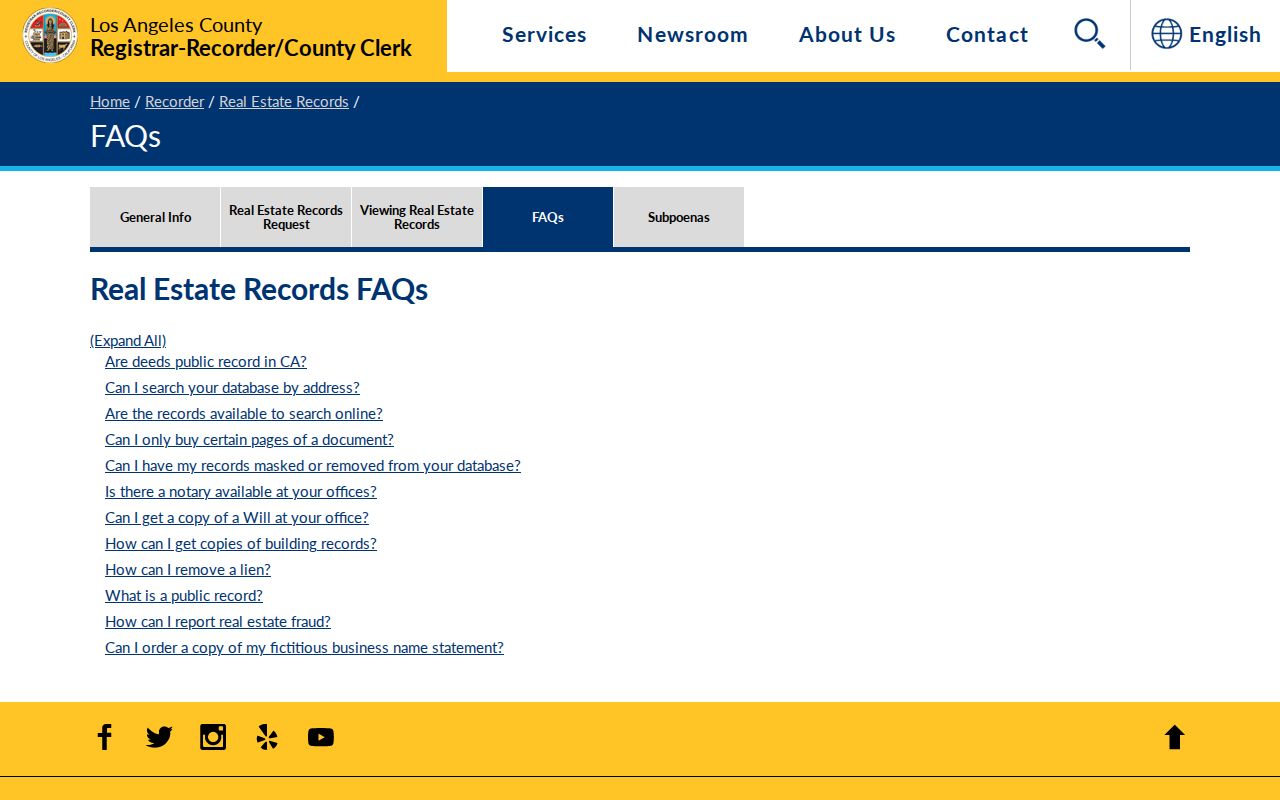
The offline index is a local fact worth stating plainly: public records exist, but the county does not provide a public online address index.
Lynwood Haines Years for Past Residents
The most precise verified reverse-directory trail for previous residents is the LA County Library Californiana Haines shelf. South Suburban contains Lynwood entries for 1981, 1983 to 1986, and 1988. South Central contains 1989 to 1992. The inventory flags the 1981 and 1983 Lynwood coverage as partial.
Search the address as printed, including abbreviated street forms and numbered-street filing variants. Record the listed name, spouse or occupation if shown, telephone if present, and the volume year. A missing listing can mean an unlisted number, a gap in the local section, or a changed coverage area.
The Haines source answers who was listed at an address. It does not answer who owned the parcel. Pair it with a deed, Assessor context, permit, or census before using the phrase previous residents.
Lynwood Directory Census Households
A city directory can bridge census years. NARA describes directories as tools that help locate people for the 1930 census, and the 1950 census is the newest publicly released decennial census under the 72-year rule. A directory gives a street or name clue; the census gives a household snapshot at a fixed date.
Use the same address in the nearest available Haines or telephone volume, then compare the surname, spouse, occupation, and household details in the census. If an address changes, keep both the old and new street spellings. A directory disappearance can be a move, omission, coverage gap, or unlisted phone, not proof of death.
After the census, add a deed or permit. The title record identifies an ownership transfer. The permit dates physical work. The directory identifies a listed person. Previous residents become credible when the roles overlap without being confused.
Lynwood Permit Clues for Past Addresses
Building and Safety records can date construction, alteration, repair, demolition, inspection, or a planning application at an address. The City’s public page describes an address map lookup and a permit drop-down. A new online permit portal launched in September 2025 for listed permit, planning, and inspection functions, but older files and exact historical coverage may still require a counter or records request.
A permit applicant or contractor is not automatically a former resident. The useful join is address plus date plus physical change, then a directory, deed, or newspaper source for the person question. A Real Property Report application can add regulatory context before a sale or exchange, but it is not a household roll.
For a past address, request a narrow file by street address, parcel, permit type, and date range under the California Public Records Act. Expect privacy or safety redactions where the law requires them.
Lynwood Sanborn Building Evidence
Sanborn fire-insurance maps can show a building footprint, dimensions, materials, height, use, windows, and doors. That structural detail can explain a directory or deed clue, but a Sanborn sheet is not a people list. It should be paired with a dated address source.
The Library of Congress catalog and Los Angeles atlas finder cover held maps and selected scans, but the research did not verify a standalone Lynwood edition or year. A generic Los Angeles map should not be treated as proof of Lynwood coverage. Search the catalog under California and Lynwood, then ask LA County Library about its Digital Sanborn Maps access.
For a visual reference, the Library of Congress Sanborn search guide explains the map fields and catalog limits.
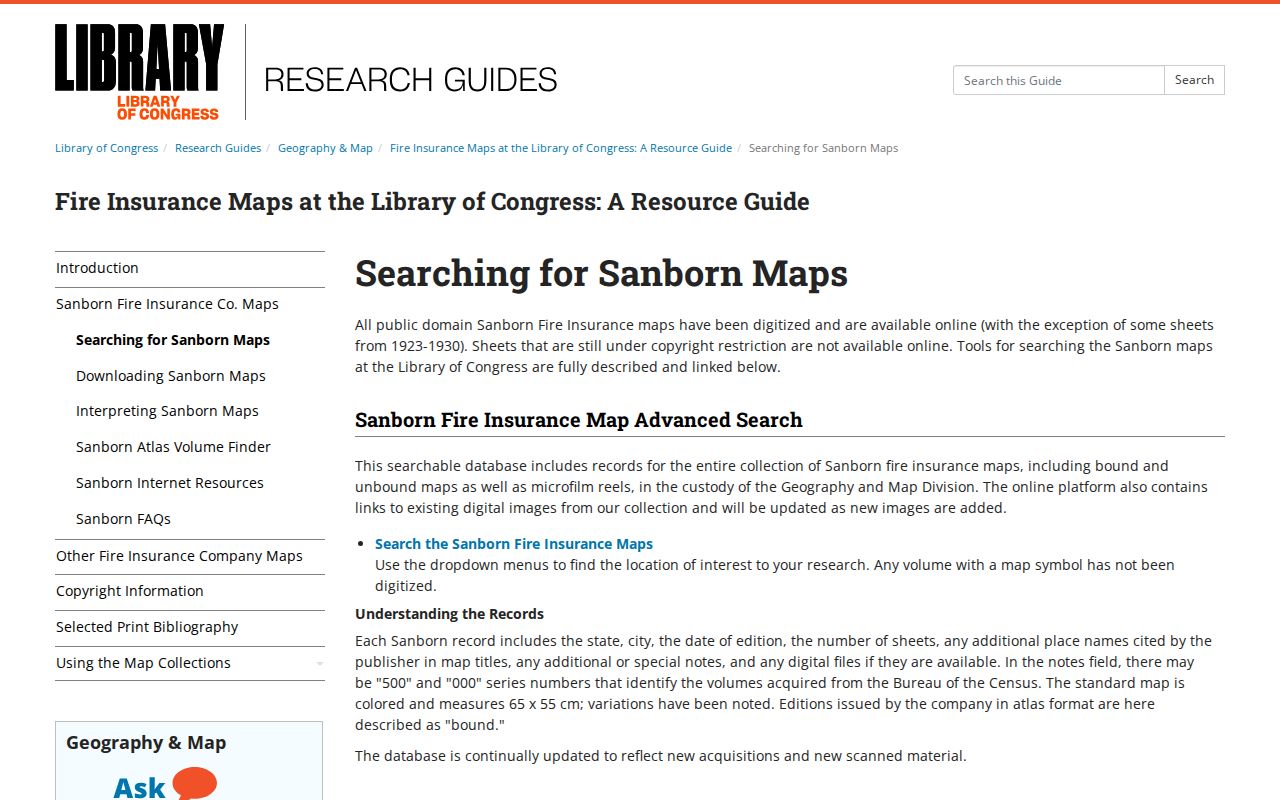
Map evidence can show what stood at a place. A directory, deed, or census must supply the person and date.
Lynwood Obituaries for Past Households
When a former household ends in a death, the library’s newspapers, an obituary, a probate case, or a vital-record index can provide the next link. Lynwood Express Library names the Los Angeles Times, LA Watts Times, Long Beach Press-Telegram, and Los Angeles Wave. LAPL warns that not every metropolitan resident received an obituary, so a no-hit has little force.
Los Angeles Superior Court probate cases from 1983 forward can identify a decedent, petitioner, personal representative, and sometimes heirs or notice recipients. Older cases move to Archives. A probate address may be a mailing or service address rather than a residence. Pair the case with a death record, obituary relationship, and recorded estate transfer.
Use the family and address clues to support a house history. Do not republish private contact data or infer a living person’s current location from an old filing.
Lynwood Rancho-to-Parcel History
Lynwood’s land story reaches beyond its 1921 incorporation. The City traces the area from the 1810 Rancho San Antonio grant and a U.S. patent dated July 24, 1847, through Guadalupe Lugo, Heldman, M. A. Shields, Slauson, and C. H. Sessions. Sessions established a dairy and creamery around 1902 at present Sanborn Avenue and Long Beach Boulevard.
The Lynwood Company opened about 800 acres as home sites in 1913, with promotional lots described as 100 by 800 feet. Those deep lots and later subdivision changes help explain why a legal description, tract, lot, and parcel map can outlast a street label. The Pacific Electric line came through in 1904 to 1905, and its depot opened at Long Beach Boulevard and Fernwood Avenue in 1929.
A past-resident search should not project the modern boulevard name backward without a map or plat. Old place names, road changes, and library moves can change the way an address appears in a directory or newspaper.
Lynwood Previous Residents Limits
Previous residents are reconstructed from dated clues. A deed proves a recorded title role. A directory proves a listed person or subscriber. A census shows a household on an enumeration date. A permit shows work or an applicant. A probate file may show an estate connection. None proves continuous residence across every year.
The Assessor card does not show every occupant. The Recorder index does not search by address. A missing directory line can be an omission. Safe at Home can replace an eligible participant’s address, and DMV or utility information is not a lawful public substitute. A gap is a gap, not a negative identity finding.
Lawful house history. Use previous residents research for genealogy, property history, civic memory, and personal curiosity. Do not use an old address trail to track, stalk, harass, threaten, or harm anyone.
The historical collections themselves are described on the Lynwood city directories page. Current parcel work belongs in the by-street records trail.