
Lynwood Neighbors by Record
A block-level search uses several sources because no single public directory lists every Lynwood neighbor. The table sets the proper question beside the proper keeper.
| Source | What it shows about a block | Access |
|---|---|---|
| Assessor Map Search | Adjacent parcel geometry, AINs, situs, use, and card facts | Free address or AIN map browse |
| Assessor roll | Specific assessee and mailing address for a selected parcel | Phone, contact form, or office |
| City zoning map | Land-use designation and planning context inside Lynwood | City Planning page and map |
| RR/CC deeds | Current or prior title parties and transfer dates | Offline name and year index |
| Permits and code files | Address-dated work and releasable applicant evidence | Direct request; no verified public browse |
| Reverse directories | Historical listed subscriber or resident snapshots | Library Californiana, in person |
| Block Watch | Voluntary civic contacts and block-captain program | City program; no public member roster |
Owners are not the same as occupants. A mailing address is not the same as a situs. A reverse-directory listing is not a deed. Those distinctions keep a Lynwood neighbors lookup from becoming a false household claim.
Map Lynwood Neighbors' Parcels
The adjacent-parcel method starts with one seed address and moves outward on the county Assessor map. The dynamic map’s exact toolbar labels, buffer behavior, and export limits were not exposed in the research session, so use the documented map and parcel-card actions without inventing a radius feature.
Follow the block flow below and save only the parcel facts needed for the question.
- Search the seed address in the Assessor Portal and open Map Search or the parcel map.
- Click parcels that touch or face the subject parcel, then record each AIN and verify its situs address.
- Open each parcel card and compare use, status, building facts, values, and legal-description clues.
- Use the specific-property Assessor route for a selected assessee or mailing address.
- Move to deeds, permits, or historical directories only when the record role and time period fit.
GIS-NET documents address, AIN, intersection, query, buffer, measure, export, and aerial tools, but it is a county planning app for unincorporated territory. It is not the controlling zoning map for incorporated Lynwood.
For a visual reference, the LA County GIS-NET public tools show the documented adjacent-parcel and planning functions.
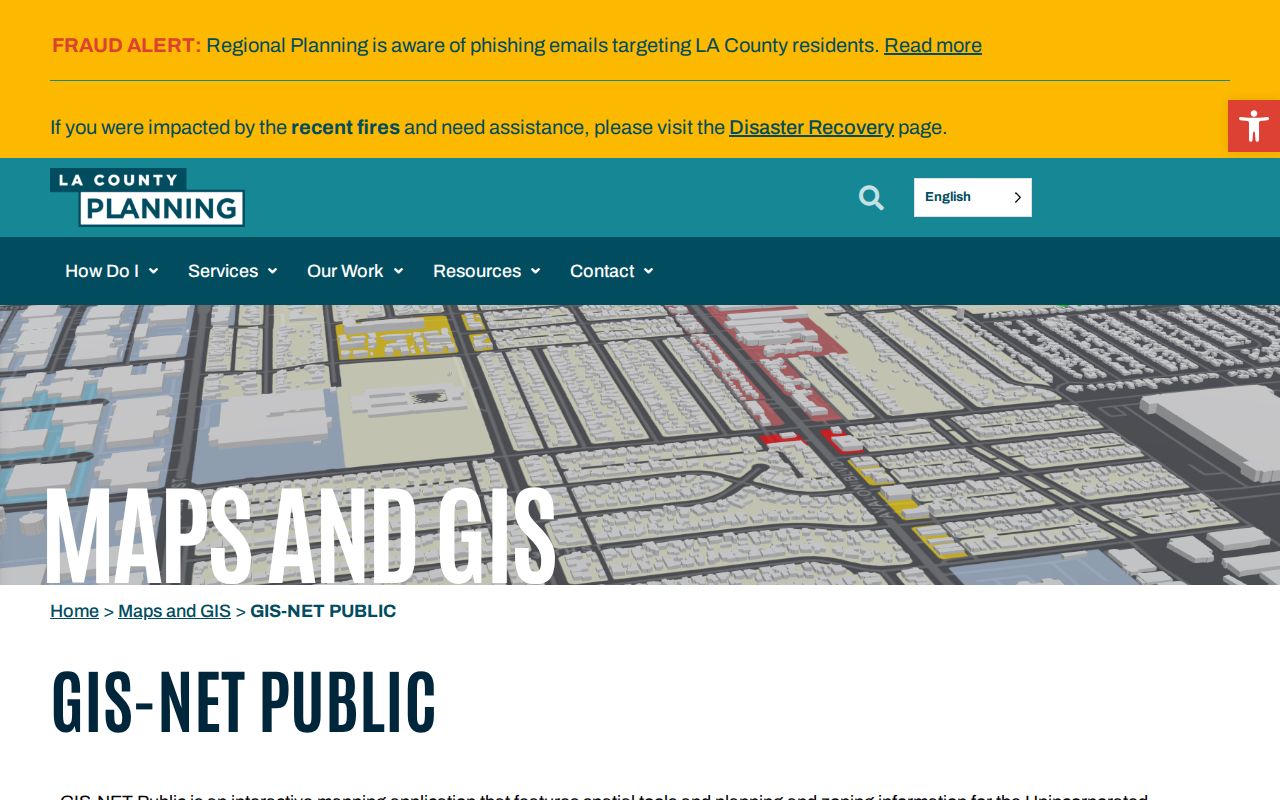
The map supplies spatial order. It does not supply a list of household members.
Lynwood Neighbors' Situs and Mailing
Situs is the physical tax location of a parcel. A mailing address is where the assessee receives correspondence. When the two differ, the difference may suggest an entity, trust, manager, or owner who receives mail elsewhere, but it does not prove who lives at either address.
The online card shows the situs and suppresses owner and mailing fields. The county Property Tax FAQ provides a specific-property phone, office, or contact-form path. Use that route only for the selected parcel and keep the result tied to its AIN.
Across a block, a cluster of different mailing locations can be an ownership pattern. It is not a resident pattern. A neighbor search should describe the record, not fill the gap with an assumption.
Lynwood Neighbor Deeds and Turnover
Deeds can show how title changed from parcel to parcel. The RR/CC index is arranged by grantor and grantee name and year, with no public web search by address or APN. Start with the Assessor AIN, request the selected assessee, and then search the Recorder for an acquisition deed.
For one parcel, search the current owner as grantee around the purchase year. Take the grantor from that deed and search the seller as an earlier grantee. Confirm the same legal description, tract or lot, and document number each time. A deed of trust or reconveyance is financing evidence, not necessarily a transfer of ownership.
At block scale, compare transfer dates rather than building a people list. A cluster of recent instruments can show title turnover. It cannot show every move, occupant, or family member.
For a visual reference, the RR/CC Homeowner Notification Program describes ownership, loan, default, and sale notices sent to enrolled owners.
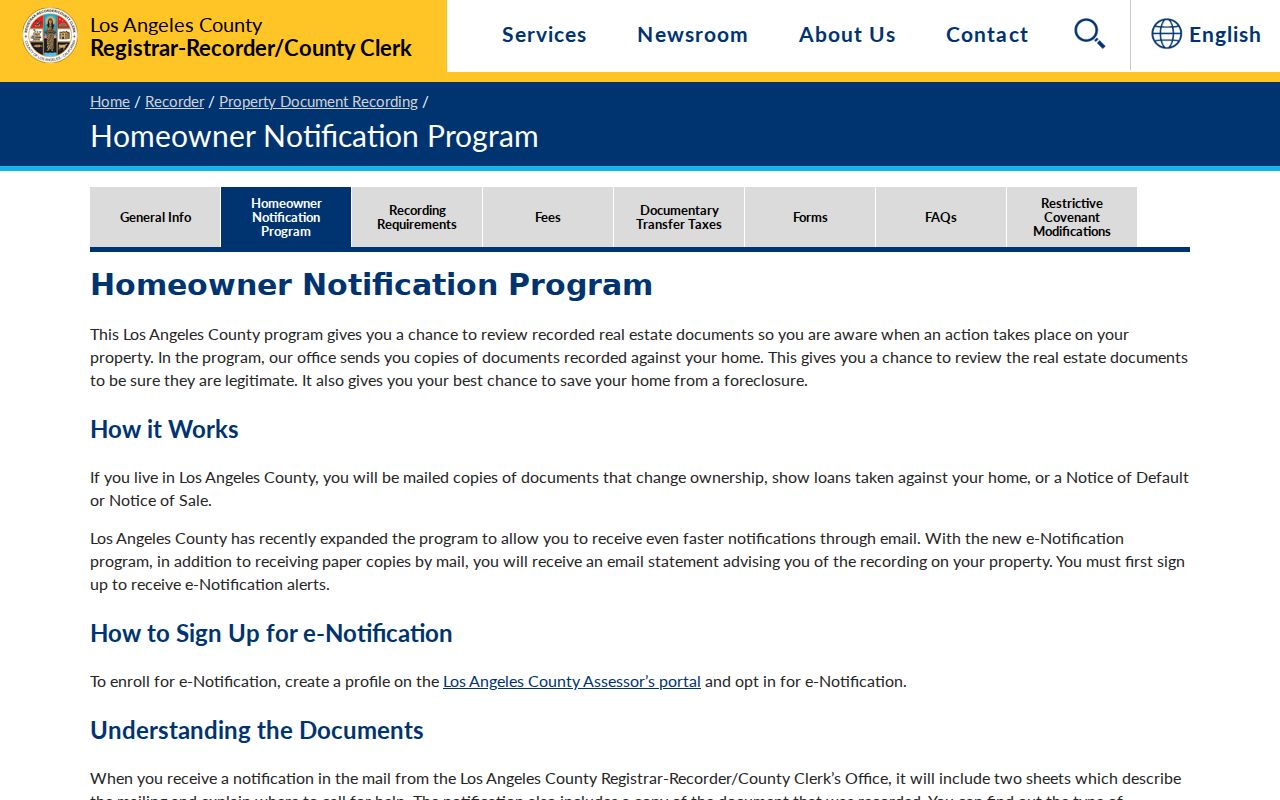
Notification is a fraud-alert service for a property owner, not a public neighbor directory.
Lynwood Neighbor Directories
The Haines South Suburban criss-cross shelf lists Lynwood for 1981, 1983 to 1986, and 1988, with partial coverage flags in 1981 and 1983. South Central continues with 1989 to 1992. These books begin with street and house number, then return a listed name or subscriber.
Use the exact volume year and street form. A missing name can mean an unlisted phone, annual gap, partial local section, or a changed area. Pacific Bell Midcities address and phone volumes and later yellow or white pages add other subscriber snapshots, but they have different inclusion rules.
A reverse directory gives historical block texture. It does not replace a current parcel card or a deed. The full collection and OCR advice belong on the city directories page.
Lynwood Neighbor Voter Records
The LA County voter-status page is a self-check that requires last name, birthdate, residence house number, and ZIP. It does not return a street list or let an ordinary visitor browse every registered voter on a Lynwood block.
Bulk voter information is restricted under Elections Code sections 2188 and 2194. A permitted file request can require a contract, permitted-purpose certification, geographic choice, report selection, identification, signature, and fee. Social Security number, driver’s-license number, signature, full birthdate, and protected residence data are not ordinary public fields.
Participation history indicates an election in which a person voted, never a ballot choice. Safe at Home participants can use confidential voter registration and keep residence information out of ordinary voter media.
For a visual reference, the LA County voter-information request page explains the purpose-limited file channel.
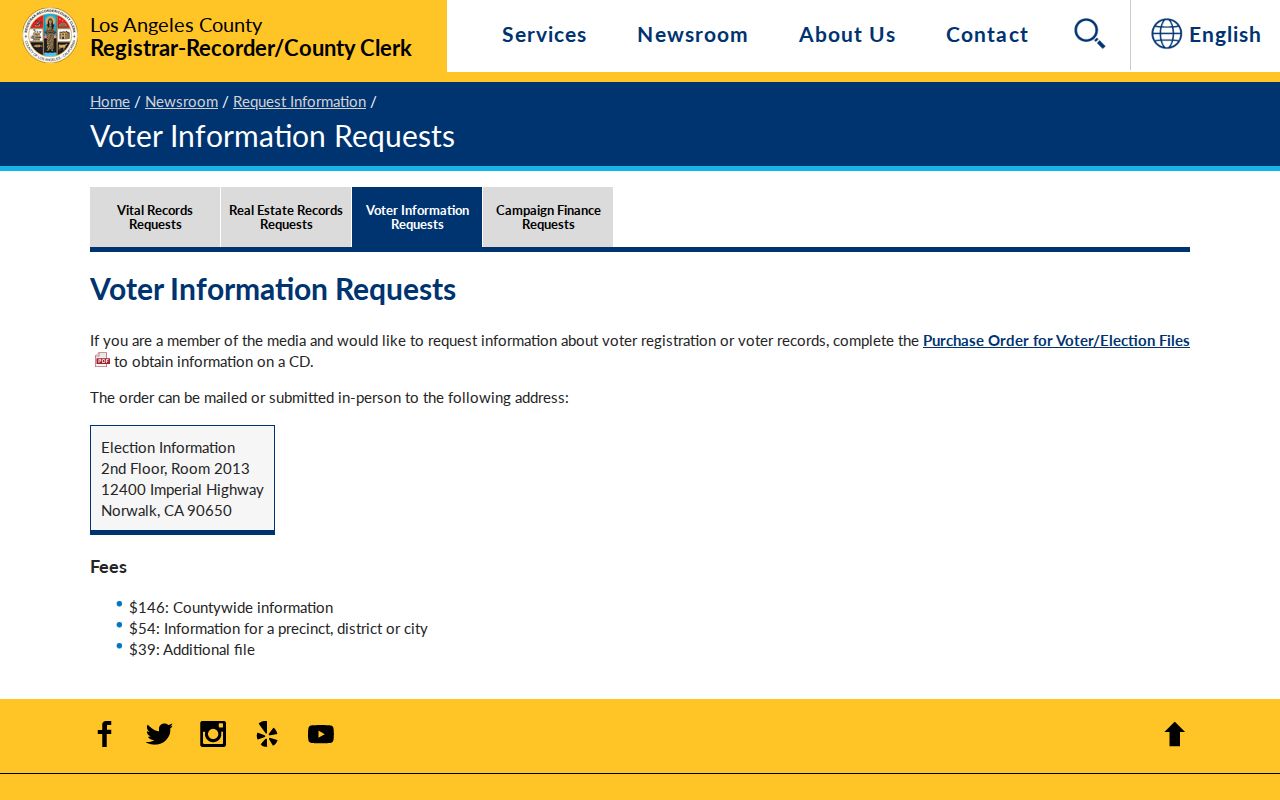
A voter record can support a lawful civic question, but it is not a general list of Lynwood neighbors.
Lynwood Neighbor Corridors and Nodes
Neighborhood identity in Lynwood is shaped by corridors and civic nodes. The City describes the Alameda Street corridor, Long Beach Freeway, and Century Freeway as major geography. The General Plan identifies Lynwood Towne Center or Marketplace, St. Francis Hospital and adjacent institutional uses, and Civic Center or Park as activity nodes.
The General Plan proposed eight residential districts based on land use and logical borders, but the research did not establish those proposals as official neighborhood names. Do not turn a planning concept into a public membership directory. Use the nodes to orient a map, then verify the parcel and jurisdiction.
The same rule applies near Lynwood Island. A local postal label can be familiar while the controlling map belongs to unincorporated county territory.
Lynwood Neighbor Block Watch Contacts
Lynwood’s official newsletters document a City Neighborhood Block Watch Organization in partnership with the Los Angeles County Sheriff’s Century Station. A 2016 newsletter described more than 50 captains, each responsible for a block, and invited residents to start a program through the city. A 2024 notice listed a captains’ meeting on the fourth Tuesday at 6 p.m. at Bateman Hall and said new captains were sought. The 2026 National Night Out notice identifies the Neighborhood Block Watch Association as an organizer.
This is a voluntary civic connection, not an official roster of Lynwood neighbors. The City does not publish a public captain or member directory, and no authoritative umbrella directory of local associations or HOAs was verified.
| Public contact | What it supports |
|---|---|
| City Neighborhood Block Watch | Starting a block program and learning meeting information. |
| City main line, 310-603-0220 ext. 505 | Published route for Block Watch program questions. |
| Bateman Hall meeting notice | Public meeting context; not a private member list. |
| Lynwood Rotary references | Civic organization presence in city newsletters; no roster published. |
Contact a group for consent-based connection. Do not scrape a newsletter, infer captains from an address, or turn a voluntary program into a people list.
Protected Lynwood Neighbor Addresses
Safe at Home, governed by Government Code sections 6205 to 6216, supplies a substitute mailing address and confidential mail forwarding for eligible Californians. The program covers qualifying victims, certain threatened workers, and household members. State and local agencies generally accept the substitute address, and Government Code section 6209.5 supports a participant’s request to use it in certain real-property documents.
A missing address in a block record may therefore reflect lawful confidentiality. It does not prove that a person left Lynwood. DMV personal information, utility accounts, protected voter fields, sealed cases, and private household details are also outside ordinary neighbor research.
For a visual reference, the California Safe at Home FAQ explains the privacy program and its limits.
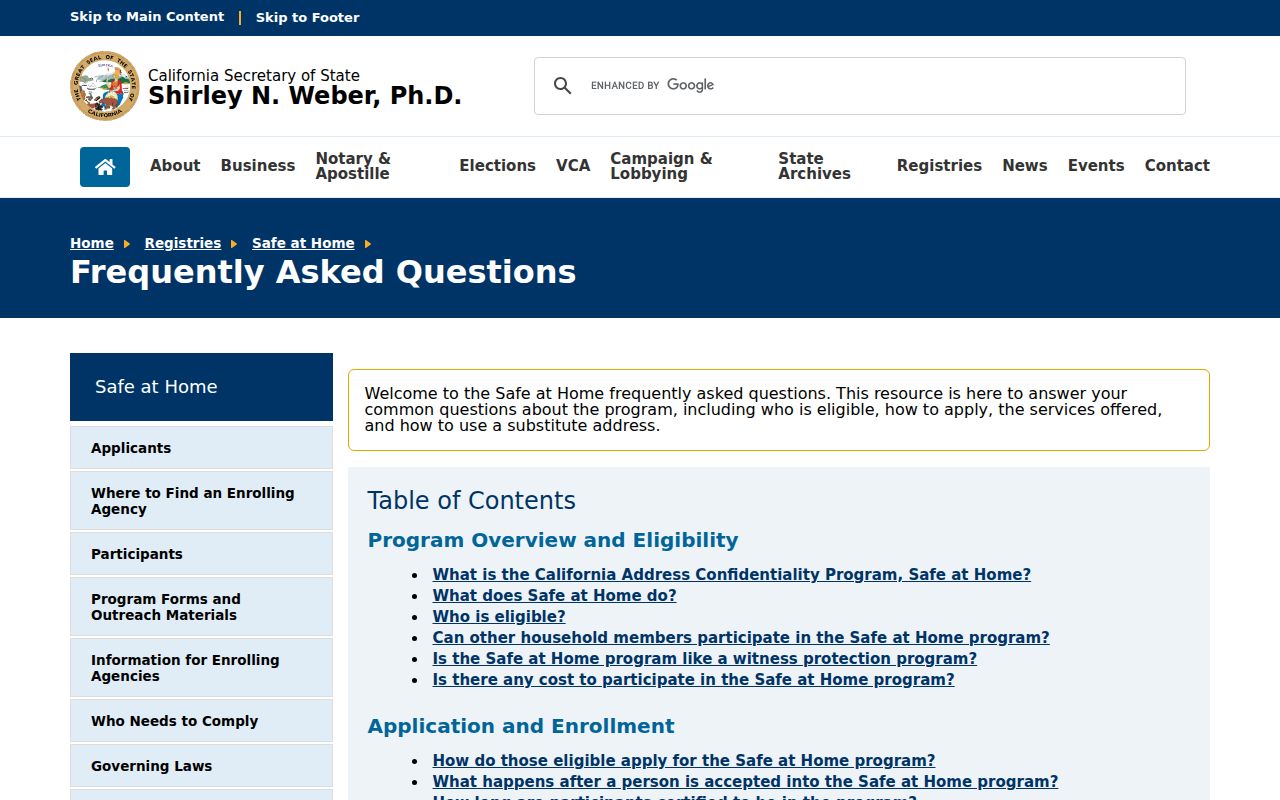
Privacy protection is part of the block record’s meaning, not a defect to work around.
Official Lynwood Neighbor Records
Commercial neighbor-lookup tools can be fast, but they build probabilistic profiles from mixed sources. Official records are slower and narrower, but the custodian, field, date, and correction path are clearer. Neither category should be used to manufacture a list of private households.
| Category | Strength | Limit |
|---|---|---|
| County parcel and deed records | Named custodian and stable property keys | Ownership is not occupancy; deed search is offline by name and year |
| City permits and planning | Address-dated physical or land-use clues | Applicant is not automatically a resident; public search is limited |
| Historical directories | Address-to-listed-person context for selected years | Omissions, partial coverage, and subscriber limits |
| Commercial compilation category | Quick cross-source leads | Stale, merged, opaque, and not an official record |
Use an official record to verify a lead, and use the custodian’s correction route when it is wrong. The private category never replaces the parcel, deed, court, voter, or library source.
Privacy Limits on Lynwood Neighbors
A neighbor lookup can map parcels, ownership clues, dated transfers, planning context, historical subscribers, and voluntary civic programs. It cannot reveal every household member, current occupant, protected voter, utility customer, DMV address, sealed court party, or person omitted from a directory.
The full named-street chain belongs on the Lynwood by street page. The block angle is smaller: parcel adjacency, record roles, civic consent, and the limits around a nearby address.
Lawful personal use. Use Lynwood neighbor records for getting oriented on a block, family history, civic contact, property history, or personal safety. Never use them to watch, stalk, harass, threaten, or harm anyone.